
If your child has a hard time waiting for a toy, joining a game, or letting another child have a turn, you are not alone. Turn-taking and sharing are social skills that often need to be taught in small, clear steps, especially for children with Autism Spectrum Disorder (ASD) or other forms of neurodivergence.
Social skills groups can help by giving children structured, supportive practice with peers. Research on social skills interventions shows that group-based programs can support social communication, especially when skills are practiced in real situations, not just talked about in a lesson, as discussed in this social skills review.
- Social skills groups teach turn-taking and sharing through modeling, practice, feedback, and repetition.
- Structured group activities help children practice reciprocity, impulse control, and cooperative play.
- Natural peer-to-peer practice matters because children need to use skills outside the therapy room.
- A neuro-affirming approach focuses on connection and communication, not forcing a child to “act typical.”
- Teens may need different social goals than younger children, such as conversation repair, group projects, or handling disagreements.
Why Turn-Taking and Sharing Can Be Hard
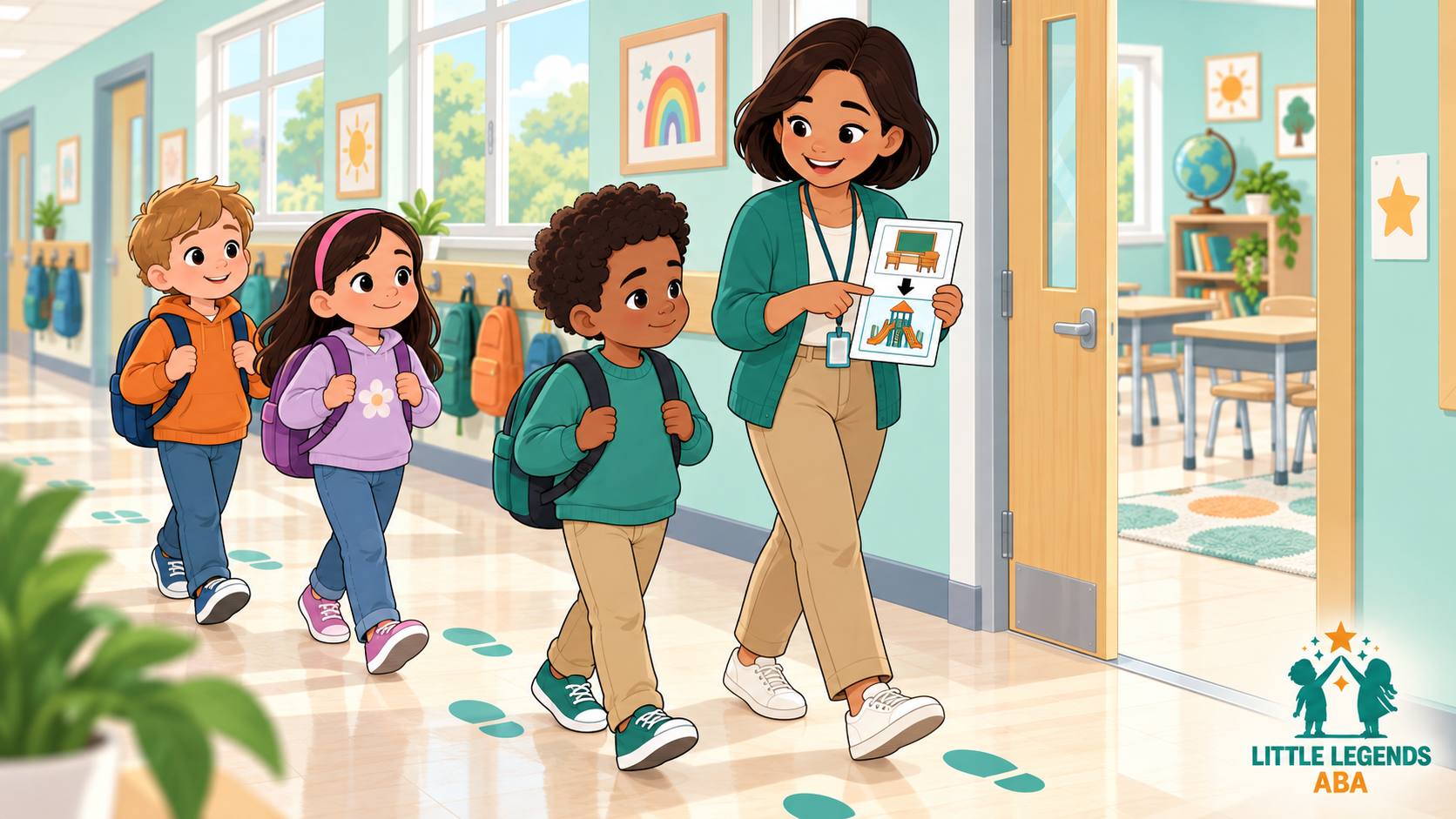
Turn-taking and sharing may look simple from the outside, but they involve many smaller skills. A child may need to notice another person, understand the group routine, manage disappointment, wait, communicate a request, and shift attention.
For many children, this connects to social-emotional learning. They are learning not only what to do, but how to handle the feelings that come with waiting or losing access to something fun.
A child might understand the rule “take turns,” but still struggle when the favorite train, tablet, or swing is involved. That does not mean the child is being difficult. It often means the skill needs more practice, clearer support, or a calmer setting.
How Social Skills Groups Teach Turn-Taking and Sharing
Good social skills groups build skills step by step, and evaluating readiness by identifying signs your child is ready for a social skills group helps clinical teams place your child in the right peer environment.
Common strategies include:
- Modeling: An adult or peer shows what taking turns looks like.
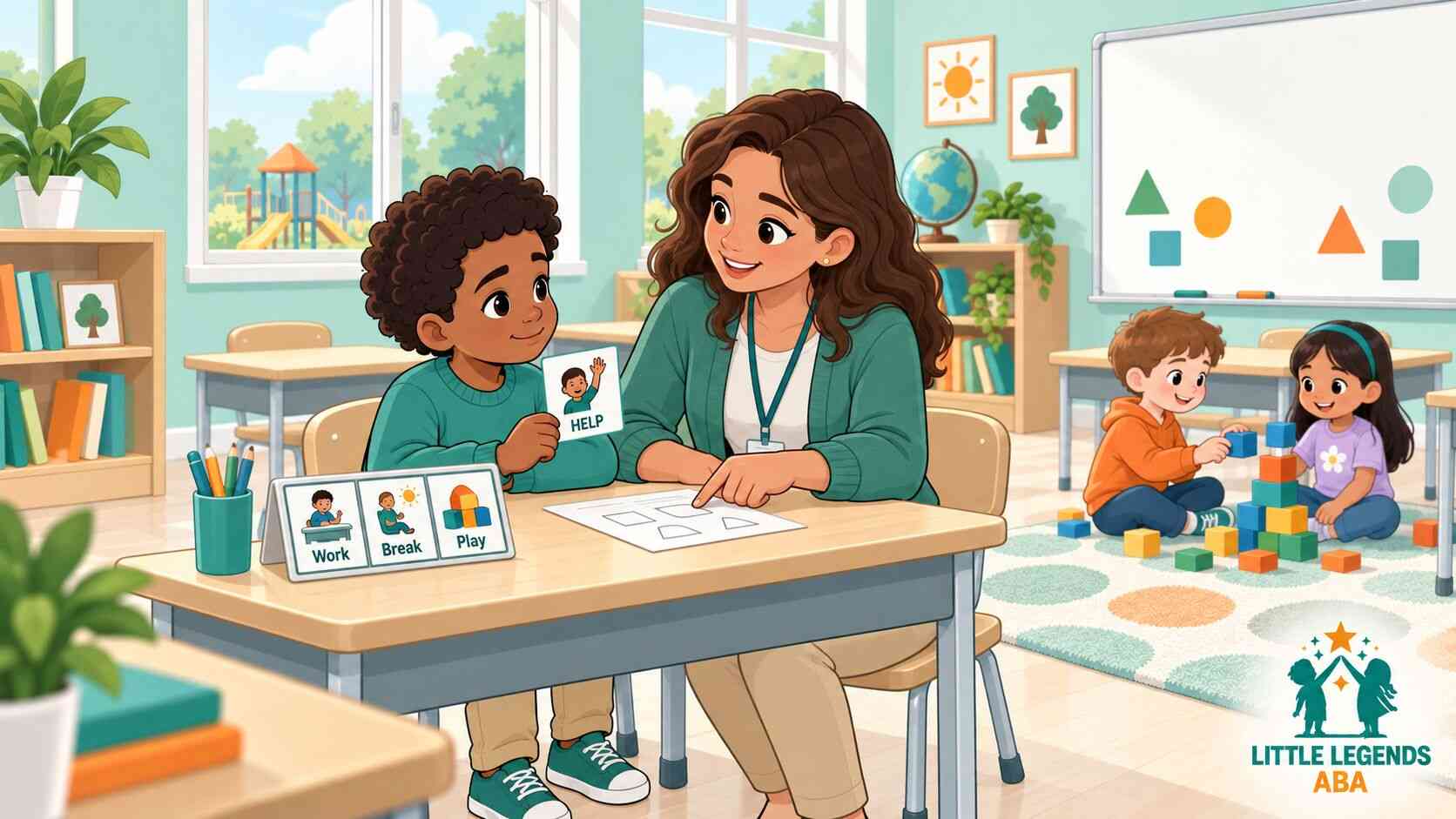
- Visual supports: Children may use cards, timers, or turn boards to understand when their turn is coming.
- Prompting: A therapist gently helps the child know what to say or do next.
- Reinforcement: Positive feedback helps the child understand what worked.
- Role-play: Children practice before trying the skill in a less predictable peer setting.
In Applied Behavior Analysis (ABA), these goals are often broken into teachable steps. If you are unsure who creates goals or who works directly with your child, this guide on BCBA and RBT roles can help make the therapy team easier to understand.
The Role of Structured Group Activities
Structured activities give children a clear reason to interact. Instead of saying, “Go play together,” a therapist may set up a simple board game, building task, snack routine, or cooperative art project.
These activities support:
- Reciprocity, or the back-and-forth nature of social interaction.
- Impulse control, such as waiting before grabbing a game piece.
- Cooperative play, where children work toward a shared goal.
- Peer interaction, including asking, responding, and repairing small misunderstandings.
For some families, access to services and supports may involve funding programs. North Carolina families may want to learn about the NC ESA scholarship when exploring therapy and education options.
Keeping Social Skills Neuro-Affirming
Social skills work should never be about making a child hide who they are. A neuro-affirming approach respects neurodivergence and focuses on meaningful connection.
That means goals should support safety, communication, friendship, and comfort. For example, a child does not need to make eye contact to be “social.” They may show attention by turning their body, answering, using a device, or staying near the group.
A helpful goal might be, “Ask for a turn using words, gestures, or a communication device.” A less helpful goal would be forcing a child to copy social behaviors that feel uncomfortable and do not improve connection.
Adapting Groups for Teens
Adolescents often need social skills instruction that feels age-respectful, making the process of designing social skills groups for teens essential when targeting conversation flow and group project collaboration.
For teenagers, group goals may include:
- Joining a conversation without interrupting.
- Working with classmates on a project.
- Handling teasing or exclusion safely.
- Respecting personal boundaries.
- Sharing materials during clubs, sports, or community activities.
Research on adolescent social skills programs, including peer-focused approaches, suggests that structured instruction can be helpful for some teens, though progress depends on fit, practice, and support across settings, as shown in this adolescent intervention study.
Why Natural Practice Matters
Children need chances to use skills with real peers in real routines. A child may take turns beautifully with a therapist, then struggle during recess or a sibling game at home.
That is why naturalistic practice is so important. Skills should be practiced during play, meals, classroom routines, community outings, and family activities when possible. Long-term, the goal is not perfect sharing every time. The bigger goal is helping children build confidence, communication, flexibility, and relationships that can support adult functioning later in life.
If your family is looking at longer-term supports, the NC Innovations Waiver may be worth discussing with your care team.
Conclusion
Social skills groups can be a helpful way to teach turn-taking and sharing, especially when they are structured, respectful, and connected to everyday life. Every child’s needs are different, so the best plan is one that supports your child’s communication style, comfort, and real relationships.
If your child is struggling with peer interaction, ask your provider how social goals are chosen, how progress is measured, and how skills will be practiced outside the group. A thoughtful team can help your child build social skills in a way that feels supportive, not pressured.
References
- National Library of Medicine: Peer-Mediated Social Skills Interventions in Primary School Settings for Autistic Children in the Light of the ICF Bio-psycho-social Model
- National Library of Medicine: Peer-mediated social skills training program for young children with high-functioning autism
- PubMed: A systematic review of peer-mediated interventions for children with autism spectrum disorder
- PubMed: Adolescents with autism spectrum disorder and social skills groups at school