

Teen social skills are different because friendship, identity, independence, and online communication all become more complicated during adolescence. A social skills group for a 7-year-old may focus on sharing toys or taking turns. A social skills group for a 15-year-old needs to address group chats, sarcasm, conflict, dating boundaries, self-advocacy, and emotional regulation.
This guide is for parents wondering whether a teen social skills group is truly age-appropriate, especially for neurodivergent teens or teens who receive other supports such as speech therapy.
- Teen social skills groups should focus on real adolescent situations, not younger-child manners.
- Ages 12 to 17 bring major changes in peer expectations, privacy, emotional intensity, and independence.
- A strong program should teach skills, practice them, and help teens use them outside the group.
- Digital communication matters because many teen friendships now happen partly through texting, gaming, and social media.
- Parents can support progress by staying involved without taking over every social decision.
Why Social Skills Groups for Teens Need a Different Approach
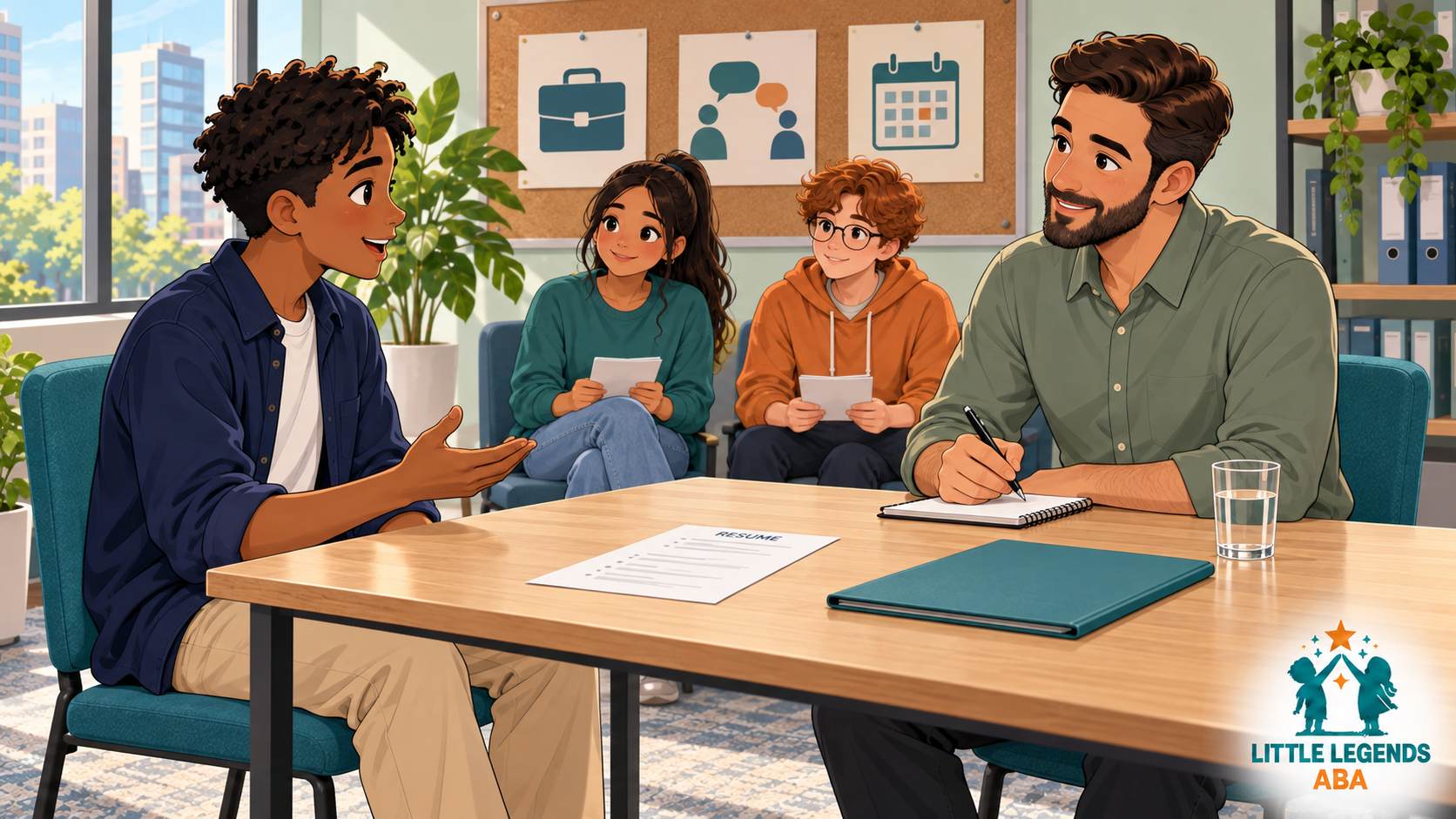
Adolescence is a big shift. Teens often care more about peer approval, personal identity, and privacy. They may also face more subtle social rules, such as knowing when teasing is friendly, when a group chat feels unsafe, or how to repair a friendship after conflict.
Research indexed in PubMed has examined structured social skills interventions for adolescents, including programs designed for autistic youth and young adults. These programs tend to work best when they are developmentally matched, meaning the examples, goals, and practice activities actually fit the teen’s world.
For younger children, social learning may center on play, basic conversation, and following group rules. For teens, the work usually needs to include:
- Reading more subtle body language and tone.
- Joining peer conversations without interrupting.
- Handling disagreement without shutting down or escalating.
- Understanding boundaries in friendships and dating.
- Communicating needs without feeling “babyish.”
- Managing stress before, during, and after social situations.
A Simple Age-Based Framework From 12 to 17
Every child develops at their own pace, but this framework can help you look for the right level of support.
| Age range | Social focus | What a group may practice |
|---|---|---|
| 12 to 13 | Transitioning into middle school social rules | Joining groups, handling teasing, understanding changing friendships |
| 14 to 15 | Building independence and identity | Self-advocacy, conflict repair, managing peer pressure |
| 16 to 17 | Preparing for adult-like relationships | Workplace communication, dating boundaries, planning social activities |
This is also where setting matters. Some teens do better practicing skills in a clinic or center first, while others need support in natural routines. If you are weighing settings, this guide to ABA therapy settings may help you think through fit.
What Parents Should Look for in a Teen Social Skills Program
A teen program should not feel like a younger child’s curriculum with harder worksheets. You may want to ask:
- Are groups separated by age, developmental level, and communication needs?
- Does the curriculum include real teen situations, including texting and online communication?
- Are emotional regulation skills taught alongside conversation skills?
- Do teens get role-play, coaching, and feedback in a respectful way?
- Is there a plan for using skills at school, home, and in the community?
- Are parents included without removing the teen’s sense of privacy?
Open-access research in PMC also highlights the importance of structured intervention design and real-world generalization, which simply means helping skills move beyond the therapy room.
Digital Communication Changes the Social Rules
Many teens build friendships through a mix of in-person and digital contact. That can be helpful, but it can also make social cues harder to read. A teen may understand a face-to-face conversation but feel lost when a friend replies with one word, leaves a message on read, or changes the tone in a group chat.
Good teen social skills groups should talk about digital communication directly. This may include:
- When to text again and when to wait.
- How jokes can be misunderstood online.
- What private information should not be shared.
- How to ask for help if a chat becomes hurtful or unsafe.
Supporting Autonomy Without Stepping Away Completely
Parents often walk a careful line during the teen years. Your child may want more independence, but you may still see social situations that feel confusing or risky.
A helpful approach is to monitor patterns, not every single interaction. For instance, you might notice whether your teen is withdrawing, becoming very distressed after social events, or repeatedly misunderstanding the same type of peer situation. If emotional shifts are intense or confusing, it can also help to understand how autism may overlap with other concerns, such as in this guide on BPD and autism.
Support can look like:
- Asking before giving advice.
- Practicing scripts only when your teen agrees.
- Helping plan transportation or timing.
- Encouraging breaks after stressful social events.
- Talking with providers when concerns continue.
Common Mistakes to Avoid
One common mistake is choosing a group based only on age. A 16-year-old who needs support with basic conversation may need a different group than a 16-year-old working on dating boundaries or job interviews.
Another mistake is treating social skills as only “conversation skills.” For many teens, emotional regulation is the foundation. If a teen feels overwhelmed, embarrassed, or unsafe, even a well-learned skill can disappear in the moment.
It can also help to coordinate care. Some teens benefit from ABA, speech-language support, occupational therapy, or counseling, depending on their needs. If you are comparing therapy roles, this explanation of ABA and OT may be a useful next step.
Final Thoughts
Teen social skills groups work best when they respect adolescence. That means giving teens room to build independence while still offering clear, compassionate support.
If you are considering a program, look for one that teaches real teen situations, includes emotional regulation, addresses digital communication, and helps your child use skills in everyday life. A thoughtful provider can help you decide what level of support fits your teen right now.
References
- PubMed: The ABC's of teaching social skills to adolescents with autism spectrum disorder in the classroom: the UCLA PEERS (®) Program
- PubMed: Evidence-based social skills training for adolescents with autism spectrum disorders: the UCLA PEERS program
- National Library of Medicine: Adolescents with autism spectrum disorder and social skills groups at school: A randomized trial comparing intervention environment and peer composition.
- National Library of Medicine: Social Skills Interventions for Adolescents with Level 1 Autism Spectrum Disorder