
When you start exploring early childhood support, you will quickly find yourself surrounded by different types of therapies. Two of the most common options you will hear about are Applied Behavior Analysis (ABA) and occupational therapy (OT).
Trying to untangle ABA vs occupational therapy can feel like learning a brand-new language. If you are brand new to this journey and feel like you do not have a clue what developmental support really means, take a deep breath. You are in the right place! We are going to explore everything from scratch, using simple, everyday words so you can feel confident.
- ABA therapy focuses on teaching daily life routines, positive social habits, and communication skills using supportive, reward-based methods.
- Occupational therapy helps children master body movements, fine motor skills, and how to comfortably process sensory inputs like sounds and textures.
- Comparing ABA vs occupational therapy shows that they are not competing choices but powerful teammates that complement each other.
- Early professional evaluations help pinpoint your child's specific needs so they receive the exact right mix of developmental support.
- Trusted health organizations and family toolkits provide incredible, judgment-free education for parents starting their journey.
Understanding Early Child Support

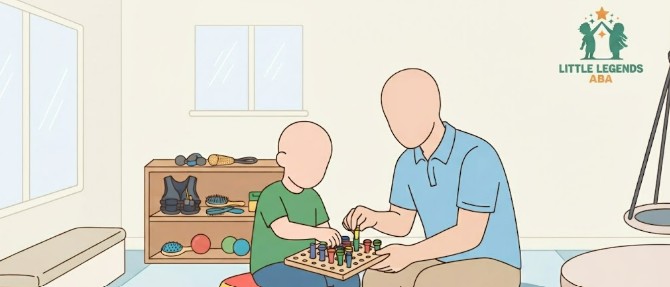
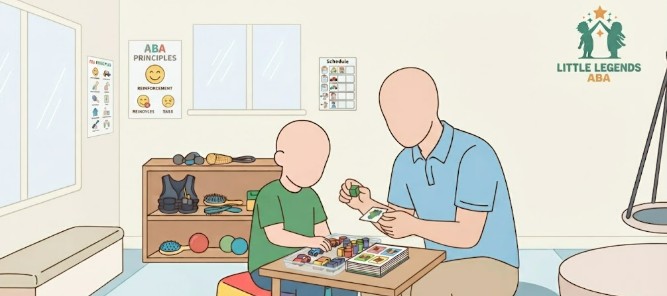
- A kid getting ABA vs occupational therapy
When you first look into therapies or developmental options, it is completely normal to feel flooded by professional acronyms and differing opinions. Every child's brain processes the world in its own unique way, and finding the right combination of guidance can completely transform your daily routine.
Some children need help learning how to navigate social interactions, share toys, or follow household multi-step routines. Others need support managing sensory overload, mastering fine motor control like holding a pencil, or building core body strength.
Different therapies can address different areas of functioning, and children may receive more than one type of support, though families often face the practical challenge of managing multiple service waitlists while navigating early intervention options.
The CDC's guidance on autism treatment and intervention explains that behavioural, developmental, educational, and other approaches may be used depending on an individual's needs. Occupational therapy can focus on practical skills such as dressing, eating, and bathing, while behavioural approaches can target learning and adaptive skills.
Knowing where to turn doesn't have to be a guessing game. Whether you want professional support right where your child feels most secure via therapy at home or prefer an engaging, specially designed environment outside the house through a dedicated therapy center, having the right team makes all the difference.
What is ABA Therapy?
ABA stands for Applied Behavior Analysis in its basic terms. At its core, ABA therapy is a warm, supportive approach that looks at how actions work, how children learn new habits, and how their surrounding environment affects their behavior.
Instead of trying to change who a child is, ABA therapy focuses on teaching practical, helpful skills that make everyday life smoother and less stressful, which often involves understanding the qualified professionals who implement behavior plans during each session.
- Helping children learn step-by-step how to brush their teeth, wash their hands, or get dressed independently.
- Teaching kids how to share toys, take turns during a game, and play cooperatively with brothers, sisters, or classmates.
- Giving children safe, healthy ways to express frustration instead of experiencing a meltdown.
What is Occupational Therapy?
While ABA therapy looks closely at overall behavior and daily routines, occupational therapy has a different, highly specialized lens. For a child, their "occupations" are playing, learning, eating, and getting dressed!
Occupational therapists (often called OTs) help children gain independence by focusing on two major areas: body movement (motor skills) and sensory processing (how the brain handles information from the senses). On top of that, some of the core areas occupational therapy will target are strengthening tiny hand muscles so children can hold a pencil, use safety scissors, or button a shirt.
Also, it includes helping with big body movements like jumping, balancing, running, and climbing safely on the playground, or helping kids who feel overwhelmed by loud noises, bright lights, or certain food textures find comforting ways to stay calm and regulated.
A Direct Look at ABA vs Occupational Therapy
When families evaluate options, it helps to look at what each discipline targets day to day, such as utilizing tools like requesting a functional behavior assessment to pinpoint why specific behavioral challenges occur in different environments.
An ABA session might involve practicing how to ask a peer to share a toy or following a visual schedule to clean up a playroom. An occupational therapy session might involve swinging on a sensory swing to build balance or squeezing therapeutic putty to strengthen hand muscles for writing.
Both therapies can happen in clinics, schools, or homes. Still, OTs heavily modify physical spaces and tools (like special seating or sensory toys) to help a child succeed, while ABA therapists heavily modify instructional cues and reinforcement schedules.
Why Most Children Love Both Approaches Together
When you look closely at ABA vs. occupational therapy, many parents realize they do not have to choose just one. In fact, these two therapies work together like peanut butter and jelly! This is because an occupational therapist might discover that a child throws tantrums because scratchy clothes hurt their skin (a sensory issue).
Once the OT recommends soft, tagless clothing, the ABA therapist can then use positive reinforcement to help the child calmly practice getting dressed every morning without a meltdown.
It does feel really scary to take the first big step to understanding just how this all works, and finding the right support team for your family does not have to be a lonely road. If you have questions about your child's milestones or want to discuss a customized therapy roadmap, we are right here to help. Reach out to our friendly team today by visiting our Contact Us page.
Resources:
-
- Association for Science in Autism Treatment (ASAT): The new parent packet
- Organisation for Autism Research: A parent's guide to research