
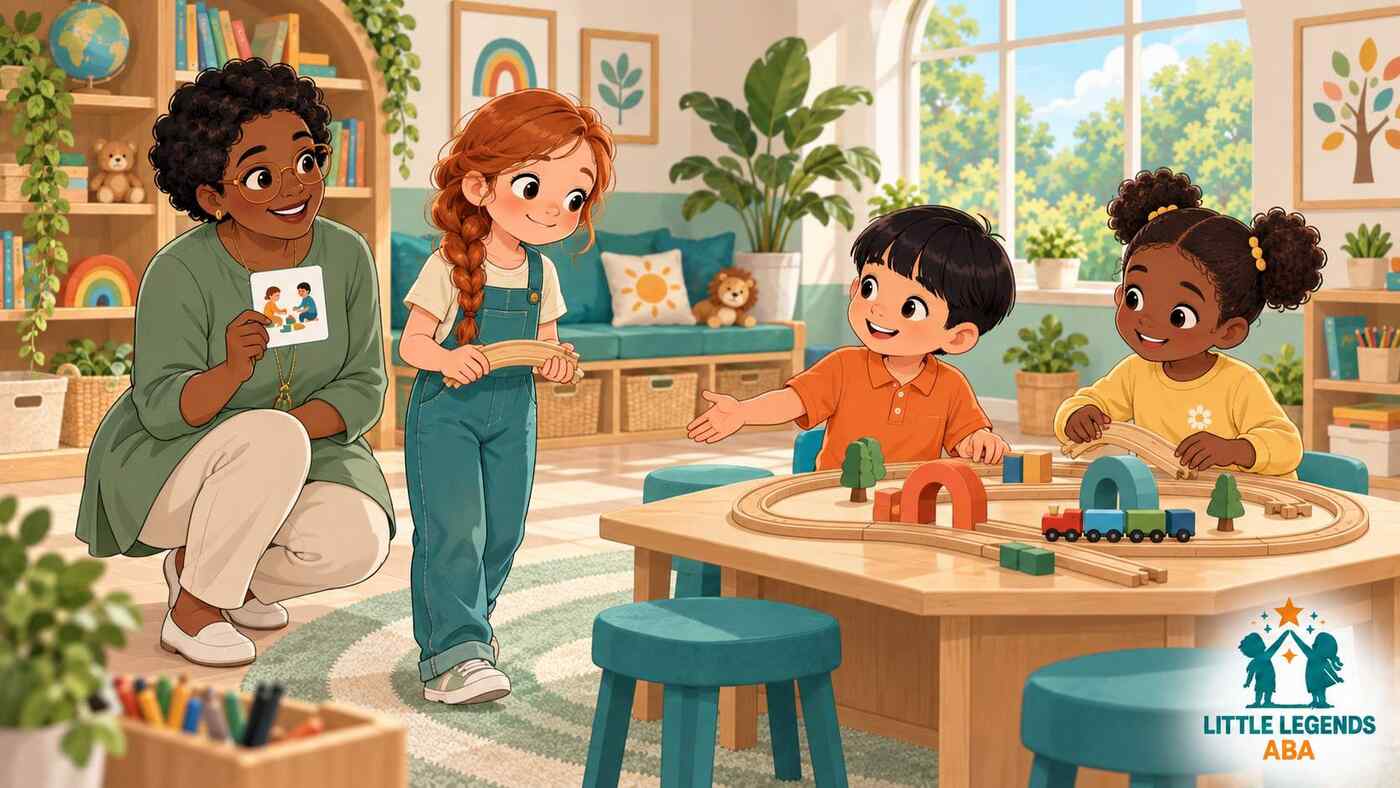
If you are wondering whether your child is ready for a social skills group, you are probably trying to balance two things: giving your child more chances to connect with peers, while not placing them in a setting that feels too overwhelming. A social skills group can be helpful when a child has enough foundational skills to participate, practice, and recover from small social challenges with support.
- A child is usually more ready for a social skills group when they can tolerate being near peers, share attention, follow simple group routines, and use some coping strategies.
- A Board Certified Behavior Analyst (BCBA) can help decide whether group therapy is appropriate and design goals that fit your child’s needs.
- Readiness does not mean your child already has strong social skills. It means they are prepared to practice with support.
- Social differences should not automatically be treated as deficits. Neurodivergent communication styles, culture, and family norms all matter.
What Is a Social Skills Group?
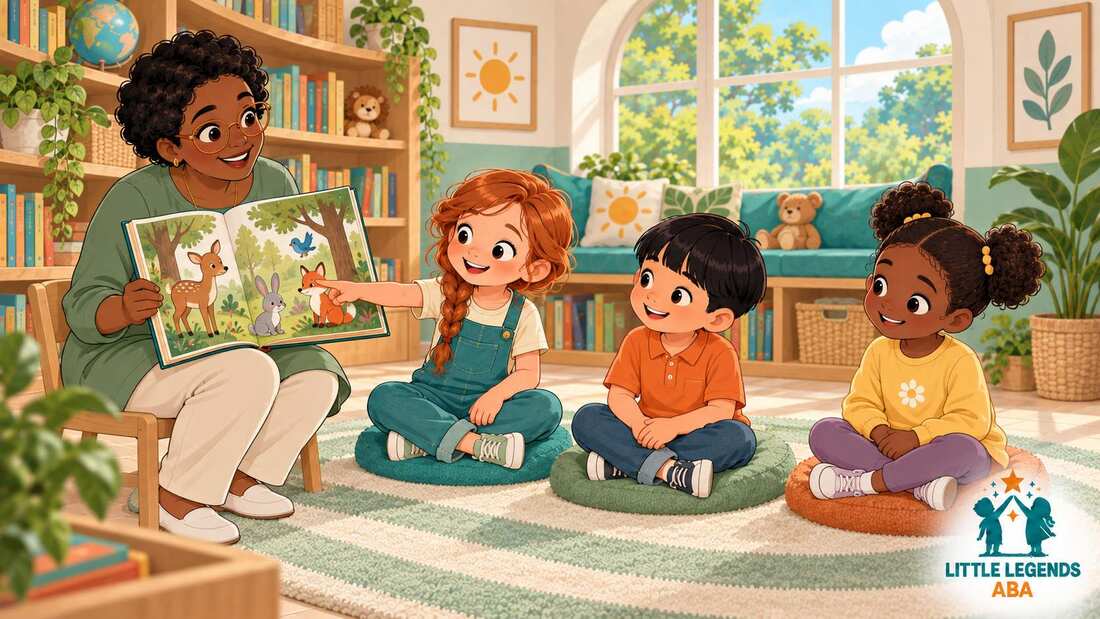
A social skills group is a structured therapy setting where children practice skills like turn-taking, joining play, conversation, flexible thinking, and reading social cues. Some programs use established approaches, including PEERS®-based models for older children and teens. Research on peer-focused social interventions has shown positive outcomes for some children, including improvements in social interaction and peer engagement, though results can vary by child and program design. One early peer intervention study is available through PubMed research.
Social skills groups are often part of a broader support plan. Some children also benefit from speech therapy for communication goals, which is why understanding ABA vs speech therapy can help families see how different services may work together.
Signs Your Child May Be Ready
Your child does not need to be socially confident before joining a group. That is the whole point of practice. Still, a few readiness signs can make the experience more successful.
Your child may be ready if they can:
- Stay near other children for short periods without becoming highly distressed.
- Share attention with an adult or peer, such as looking at the same toy, activity, or person.
- Follow simple directions in a small group.
- Wait briefly with support.
- Use words, gestures, visuals, or a device to communicate basic wants or needs.
- Recover from minor frustration with adult help.
- Show interest in peers, even if that interest looks different from typical play.
Joint attention, emotional regulation, and proximity tolerance are especially important. For example, if your child can sit near another child during a simple game and accept gentle coaching, that may be a better readiness sign than whether they can already make conversation.
When a Child May Need More Foundational Support First
Sometimes a social skills group is not the first step, and that is okay. Your child may need more one-on-one support first if group settings lead to intense distress, unsafe behavior, or frequent shutdowns.
A BCBA may recommend building prerequisite social skills before moving into a group. These might include requesting a break, tolerating short peer interactions, following a visual schedule, or practicing turn-taking with one familiar person. Families comparing settings may also find it helpful to learn about center and home ABA before choosing where social goals should begin.
The BCBA’s Role in Social Skills Groups
A Board Certified Behavior Analyst (BCBA) helps assess readiness, set measurable goals, and monitor whether the group is helping. This matters because “social skills” is a broad phrase. One child may need help joining play, while another may need support managing social anxiety or understanding teasing.
A BCBA should also look at whether anxiety is affecting participation. A child who avoids peers may not be “uninterested.” They may feel unsure, overwhelmed, or afraid of making a mistake. In that case, goals should be gentle and gradual.
Research on social skills and peer interventions suggests that structured teaching can support social development for some autistic children, but long-term success often depends on whether skills carry over into everyday settings. Another peer-mediated intervention study is listed in PubMed findings.
Respecting Neurodivergent and Cultural Social Styles
Not every social difference needs to be “fixed.” Some children communicate, play, or show interest in ways that are natural for them. The goal should not be to make every child act the same.
Culture also shapes eye contact, greetings, personal space, and conversation rules. A helpful social skills group teaches children to understand options and expectations without shaming who they are. If there are questions about diagnosis, emotional regulation, or overlapping traits, this guide on BPD and autism may offer helpful context for older children and families seeking clarity.
Graduation and Moving Into Real-Life Social Settings
A strong group should have a plan for what comes next. Graduation does not mean your child is “done” with social learning. It means they can use certain skills with less support and begin practicing in more natural places.
Good transition goals may include:
- Playing with a sibling or neighbor for a short planned activity.
- Joining a classroom routine with fewer prompts.
- Using a coping strategy during a birthday party or playground visit.
- Practicing conversation with a familiar peer outside the therapy room.
Some children may still need occupational therapy if sensory needs affect group participation. If that sounds familiar, learning about ABA and OT can help you understand how sensory, behavior, and daily living supports may overlap.
If your child is curious about peers, can handle short group routines, and can accept support during small challenges, a social skills group may be worth exploring. If they are not ready yet, that does not mean they are behind forever. It simply means the team may need to build a few stepping stones first.
A good next step is to ask your child’s provider or BCBA what readiness skills they see now, what still needs support, and how group goals would connect to real life at home, school, and in the community.
References
- National Library of Medicine: Social competence and social skills training and intervention for children with Autism Spectrum Disorders
- Springer Nature: Social skills group training in children with autism spectrum disorder: a randomized controlled trial
- Online Library Wiley: Linking intervention experiences to child outcomes in a school-based social skills training program
- PubMed: The effects of social skills training and peer involvement on the social adjustment of preadolescents