

Potty training can feel extra complicated when your child is autistic, especially if sensory discomfort, communication needs, constipation, fear of the bathroom, or changes in routine are part of the picture. Autism potty training works best when it is calm, consistent, medically informed, and matched to your child’s developmental needs, not rushed by age alone.
This guide is for parents and caregivers who want practical steps they can begin at home while also knowing when to involve a pediatrician, therapist, or behavior specialist.
- Start with a medical check, especially if your child has constipation, pain, frequent accidents, stool withholding, or sudden regression.
- Build the routine slowly with visuals, predictable steps, and small rewards.
- Sensory needs matter. The sound, smell, lighting, seat feel, or bathroom temperature may be part of the challenge.
- Communication support, developmental therapies, occupational therapy, and Applied Behavior Analysis (ABA) can all play helpful roles.
- Parent burnout is real. A sustainable plan is better than an intense plan that leaves everyone exhausted.
Start With Medical Screening First
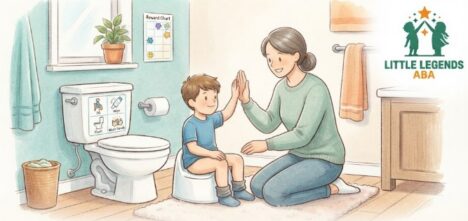
Before beginning or restarting potty training, it is a good idea to speak with your child’s pediatrician, especially if toileting has been painful, unpredictable, or stressful. Some toileting difficulties are not behavioral at first. They may be connected to constipation, diarrhea, urinary tract infections, reflux, food sensitivities, medication side effects, or other gastrointestinal concerns.
This step matters because a child who feels pain when using the bathroom may begin avoiding the toilet. From the outside, it can look like refusal. From your child’s point of view, it may feel like self-protection.
You may want to ask your pediatrician about:
- Constipation or stool withholding.
- Pain during urination or bowel movements.
- Frequent accidents after a period of success.
- Very loose stools or ongoing stomach discomfort.
- Sleep, diet, medication, or hydration changes.
- Whether a pediatric gastroenterology referral is needed.
Look for Readiness Signs, Not Just Age
Many children are potty trained around toddler or preschool years, but autistic children may follow a different timeline while navigating early milestones after an autism diagnosis, meaning the plan may need to be more individualized.
Readiness signs may include:
- Staying dry for longer periods.
- Showing discomfort with a wet or soiled diaper.
- Going to a private place to pee or poop.
- Following simple one-step directions.
- Tolerating sitting on or near the toilet.
- Having a somewhat predictable bowel movement pattern.
- Communicating needs through words, gestures, pictures, signs, or a device.
Communication is a big part of toileting. If your child has trouble saying “I need the bathroom,” they may need another way to tell you. This might be a picture card, a sign, a button on a speech device, or a simple gesture. If you are also working on language goals, it may help to understand how ABA and speech therapy can support different parts of communication and daily routines.
Create a Simple Autism Potty Training Routine
A predictable routine helps your child understand what happens next. For many autistic children, the goal is not just “use the potty.” The goal is learning a chain of smaller steps.
A toileting routine may include:
- Walk to the bathroom.
- Pull pants down.
- Sit on the toilet.
- Pee or poop if the body is ready.
- Wipe or accept help wiping.
- Flush, if tolerated.
- Pull pants up.
- Wash hands.
- Return to the activity.
At first, your child may only practice one or two parts. That is okay. Sitting for a few seconds without distress can be a meaningful early step.
Try to choose regular bathroom times, such as:
- After waking.
- After meals.
- Before leaving the house.
- Before bath time.
- Before bedtime.
Keep the tone calm and matter-of-fact. Big reactions, even positive ones, can sometimes feel overwhelming. A small reward, favorite song, sticker, token, or preferred activity may help your child connect the routine with success.
Use Visual Schedules and Social Stories
Visual supports can make potty training less mysterious. A visual schedule shows the steps in order, using pictures, icons, or simple words. Your child can point to each step, remove it when finished, or match it to the bathroom routine.
A social story is a short, personalized story that explains what will happen and why. It might say something like:
- “When my body needs to pee, I can go to the bathroom.”
- “I sit on the toilet.”
- “My caregiver can help me.”
- “Then I wash my hands.”
- “Then I go back to play.”
Keep the language simple and positive. The goal is not to pressure your child. The goal is to make the routine feel familiar before your child is expected to do it independently.
You can also place visuals:
- On the bathroom door.
- Near the toilet paper.
- Beside the sink.
- In a small travel toileting kit.
- On your child’s communication board.
Support Sensory Needs in the Bathroom
For some children, the bathroom is a sensory obstacle course. The toilet seat may feel cold. The fan may sound too loud. The flush may be startling. The light may feel harsh. The smell of cleaning products may be too strong.
Sensory processing differences can affect every part of potty training.
Try small adjustments such as:
- Using a soft child-sized toilet seat insert.
- Adding a footstool so your child feels stable.
- Letting your child flush later or leave before flushing.
- Using softer lighting when possible.
- Avoiding strong-smelling cleaners right before practice.
- Offering noise-reducing headphones if the bathroom is loud.
- Letting your child sit clothed on the toilet first.
- Practicing in short visits when the bathroom is not needed urgently.
Occupational therapy may also help if sensory sensitivities, motor planning, balance, or clothing textures are major barriers. ABA can help with routines and reinforcement, while occupational therapy may focus more on sensory comfort, body awareness, and daily living skills. Many families benefit from a team approach rather than one single strategy.
Plan for Setbacks, Regression, and Puberty
Toileting progress is rarely a perfectly straight line. Children may have accidents during illness, travel, school changes, sleep disruptions, family stress, or growth spurts. Developmental regression can also happen when a child loses a skill they previously had.
If your child suddenly starts having accidents after doing well, pause before assuming it is “behavior.” Check for constipation, infection, anxiety, routine changes, or new sensory issues. A pediatric consultation is a wise first step when regression is sudden or persistent.
Puberty can bring new toileting and hygiene challenges, too. Older children and teens may need support with:
- Menstrual hygiene.
- Privacy and body boundaries.
- Odor awareness.
- More independent wiping.
- Changing clothes after accidents.
- Managing public restrooms.
- Understanding body signals during growth changes.
For older autistic adolescents and adults, the focus may shift from early potty training to dignity, privacy, safety, and independence. Visual checklists, discreet reminders, adaptive clothing, scheduled bathroom breaks, and caregiver coaching can all help. The language should also mature with the person. A teen or adult deserves respectful support, not babyish instructions.
Protect Parent Energy During the Process
Potty training can be emotionally draining and involve extra laundry, interrupted sleep, and worry, which makes focusing on supporting your child at home through manageable daily routines especially important.
If you are feeling discouraged, that does not mean you are doing anything wrong.
A more sustainable plan may include:
- Practicing during one or two predictable times instead of all day.
- Taking data for a few days, then taking a break from tracking.
- Asking another caregiver to share the routine.
- Keeping spare clothes and wipes in easy places.
- Celebrating small steps, not just full toilet use.
- Stopping for a short reset if everyone is overwhelmed.
Parent mental health matters. If potty training is creating constant conflict, anxiety, or exhaustion, it may be time to slow down and ask for support. A good provider should help you build a plan that fits your child and your family life.
If you are preparing to work with a provider, it can help to bring specific toileting questions to the conversation. This list of ABA provider questions can help you think through goals, communication, family involvement, and progress tracking.
Common Mistakes to Avoid
Starting Before Medical Issues Are Ruled Out
If toileting hurts, training becomes much harder. Always look at constipation, pain, and other physical concerns before increasing expectations.
Changing Too Many Things at Once
A new toilet seat, new underwear, new bathroom schedule, and new reward system all on the same day may overwhelm your child. Start with one or two changes.
Treating Accidents as Defiance
Accidents can happen because of body awareness, communication difficulty, sensory distress, or fear, and understanding why specific behaviors occur is often aided by requesting a functional behavior assessment from a qualified specialist.
Skipping Communication Support
If your child cannot easily request the bathroom, they need another reliable way to communicate. Pictures, gestures, signs, or speech devices can reduce frustration.
Forgetting Long-Term Maintenance
A child may learn toileting at home but still need help at school, in public restrooms, during travel, or through puberty. Plan for generalization, not just one bathroom.
When to Ask for Professional Help
You may want extra support if your child:
- Has painful bowel movements or ongoing constipation.
- Refuses to enter the bathroom.
- Has frequent accidents after previous success.
- Smears stool or withholds stool.
- Becomes highly distressed during toileting.
- Is an older child, teen, or adult who needs more privacy-focused support.
- Has multiple therapies and the advice feels confusing.
A pediatrician can help rule out medical concerns. An occupational therapist can support sensory and motor needs. A speech-language pathologist can help with communication. ABA providers may help build routines, reinforcement plans, and step-by-step skill development.
If you are looking for support, this guide can help you find an ABA provider who fits your child’s needs and your family’s goals.
Final Thoughts
Autism potty training works best when it begins with understanding, not pressure. Your child may need medical support, sensory adjustments, visual tools, communication help, developmental teaching, or a mix of all of these.
Start small. Watch for patterns. Keep the routine predictable. And if the process feels too heavy to manage alone, reach out to a trusted pediatrician or therapy team. With the right support, toileting can become a calmer and more independent part of daily life.
References:
- National Autistic Society - Toileting and Autistic Children
- Raising Children Network - Toilet Training for Autistic Children