

Trying to get behavioral support at school can feel confusing, especially if your child does not have an autism diagnosis. The short answer is yes, a child without autism may still receive school-based behavioral supports, but that is different from insurance-funded clinical ABA therapy.
ABA, or Applied Behavior Analysis, is a science of learning and behavior. Research on behavioral interventions and related behavior support strategies includes approaches that can be used across different developmental and behavioral needs, not only autism.
- A child usually does not need an autism diagnosis to request behavioral accommodations at school.
- School-based ABA support is not the same as private clinical ABA therapy.
- Insurance-funded ABA often depends on medical necessity, diagnosis, and prior authorization.
- IEPs and 504 Plans can include behavior supports for students with ADHD, anxiety, developmental delays, OCD, or other needs.
- Private clinical recommendations can help guide school conversations, but the school team decides what it can provide.
Clinical ABA Therapy vs. School-Based Behavioral Support
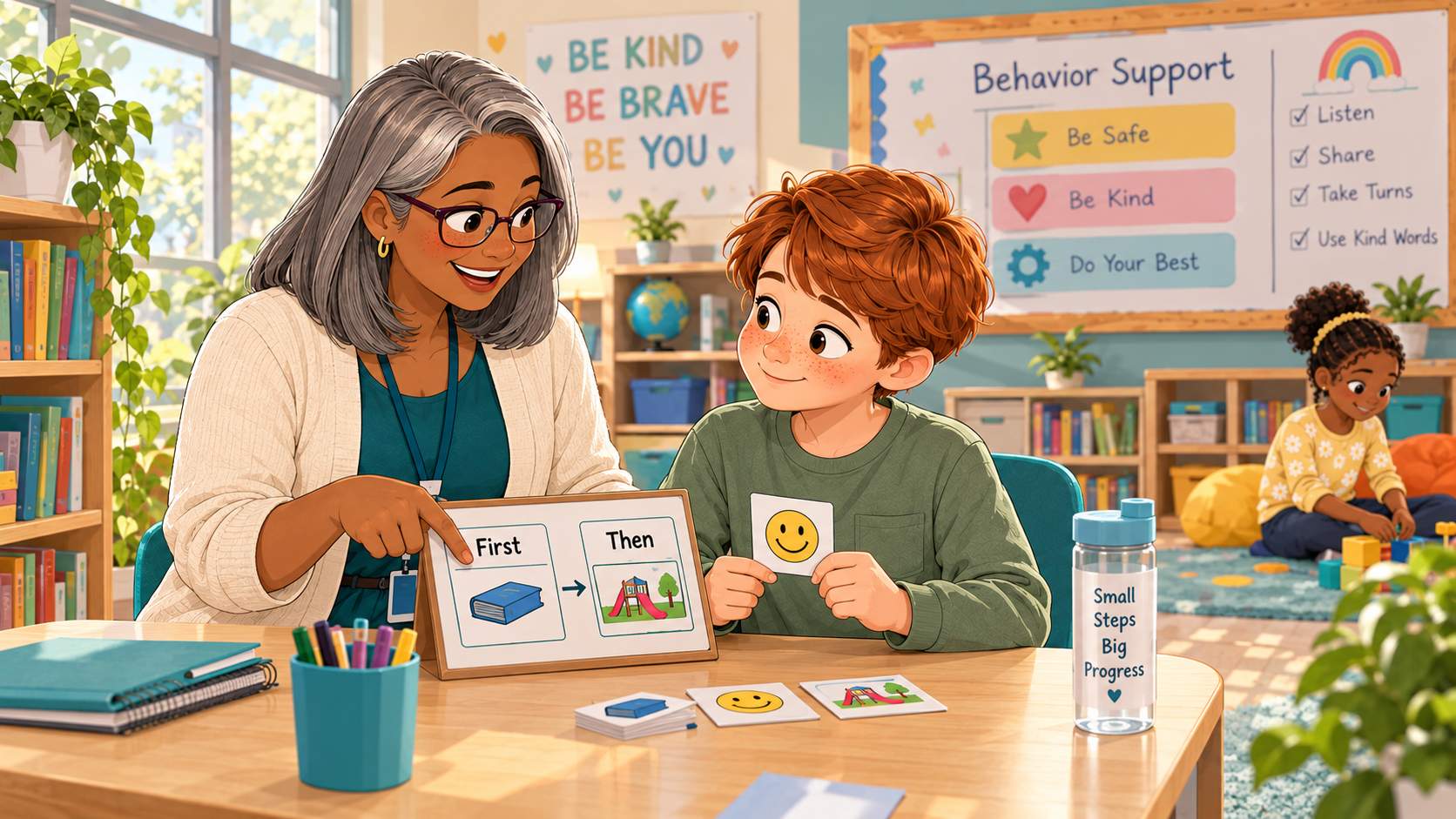
Clinical ABA therapy is usually provided outside the school system through a clinic, home-based provider, or early intervention program. It often includes assessment, treatment goals, parent training, and ongoing supervision from a Board Certified Behavior Analyst. If you are learning who does what on an ABA team, this guide on BCBA and RBT roles can help.
School-based behavioral support is different. Schools focus on helping your child access education safely and successfully. Support may include requesting a functional behavior assessment to identify what drives specific behaviors in the classroom, followed by creating a tailored behavior intervention plan:
- A Functional Behavior Assessment, often called an FBA.
- A Behavior Intervention Plan, or BIP.
- Classroom accommodations.
- Breaks, visual supports, or sensory tools.
- Positive reinforcement systems.
- Social, communication, or self-regulation goals.
Your child may receive these supports through an Individualized Education Program, also called an IEP, or a 504 Plan.
Why Medical Necessity Matters for Insurance-Funded ABA
For private ABA therapy, insurance companies often look for medical necessity. This means the service must be considered medically needed based on your child’s diagnosis, evaluation, symptoms, and treatment goals.
Many insurance plans require:
- A formal diagnosis, often Autism Spectrum Disorder.
- A pediatrician referral or specialist evaluation.
- A treatment plan from a qualified provider.
- Prior authorization before therapy begins.
This is why some families can receive school supports before they qualify for private ABA, while others pursue both paths at the same time. If your family is waiting for services, it may help to understand whether you can join multiple ABA waitlists while also asking the school for support.
How to Request Behavioral Interventions at School
You do not need to have every answer before starting the conversation. A clear written request is often the best first step.
- Write down your concerns, including what is happening and when it happens, as recognizing signs a child needs school-based ABA support will help you present concrete evidence to the educational team.
- Request an IEP or 504 meeting in writing. Ask the school to evaluate whether your child needs behavioral accommodations or special education support.
- Ask about an FBA. If behavior is interfering with learning, an FBA can help the team understand the reason behind the behavior.
- Request a behavior support plan. A plan should explain what adults will do before, during, and after challenging moments.
- Bring outside information. Private evaluations, pediatrician notes, or therapy recommendations can help the school understand your child’s needs.
- Ask how progress will be tracked. Make sure the plan includes clear data, review dates, and communication with you.
Do Non-Autistic Students Have Rights to Behavioral Accommodations?
Yes. Public school supports are not limited to autistic students. A child with ADHD, anxiety, OCD, developmental delays, emotional regulation challenges, or another disability may qualify for help if the condition affects school access or learning.
An IEP is generally used when a child needs special education services, whereas navigating the differences between an IEP and a 504 plan can help you determine the appropriate accommodation path for non-autistic students.
How to Decide Between Clinical ABA and School Support
It may help to think about where your child struggles most.
Choose school-based support when the main concerns happen during class, transitions, recess, peer interactions, or school routines.
Consider clinical ABA when your child needs broader support with communication, daily living skills, safety, emotional regulation, or behavior across home and community settings.
Some children also benefit from more than one service. For example, ABA may support behavior and learning skills, while speech therapy may support communication. This comparison of ABA and speech therapy explains how the services can work differently.
Bridging Private Recommendations With School Services
If you already have a private provider, ask for recommendations written in school-friendly language. Schools may not copy a clinical treatment plan exactly, but they can consider the information.
Helpful questions include:
- “Which strategies could be used in the classroom?”
- “What data should the school collect?”
- “How can we keep home and school expectations consistent?”
- “Who will review the plan if it is not working?”
You are allowed to ask questions, request clarification, and bring support to meetings. The goal is not to make school feel like therapy. The goal is to help your child feel safe, supported, and ready to learn.
If you are unsure where to begin, start with one written request to the school and one conversation with your child’s pediatrician or provider. Small steps can make the process feel much more manageable.
References
- National Library of Medicine: Functional Analysis With Typically Developing Children
- National Library of Medicine: Functional Analysis in Public School Settings
- PubMed: A Meta-analysis of Challenging Behavior Interventions for Students with Developmental Disabilities in Inclusive School Settings
- NIH: Classroom intervention for illness-related problem behavior in children with developmental disabilities