

A supportive home setup for ABA therapy does not need to look like a clinic. It should help your child practice meaningful skills in a space that still feels like home, with routines your family can actually keep.
If you are preparing for in-home ABA, this guide will help you create simple therapy zones, organize materials, and work with your Board Certified Behavior Analyst (BCBA) without turning your living room into a full-time therapy room.
- Your home does not need to be perfect. It needs to be predictable, safe, and useful for your child’s current goals.
- A BCBA can help you match the setup to your child’s treatment plan, including communication, play, self-help, or life skills.
- Small spaces can still support ABA therapy with portable bins, foldable materials, and shared family rules.
- The best setup changes over time as your child moves from early intervention goals to more independent daily routines.
Start With Your Child’s ABA Goals
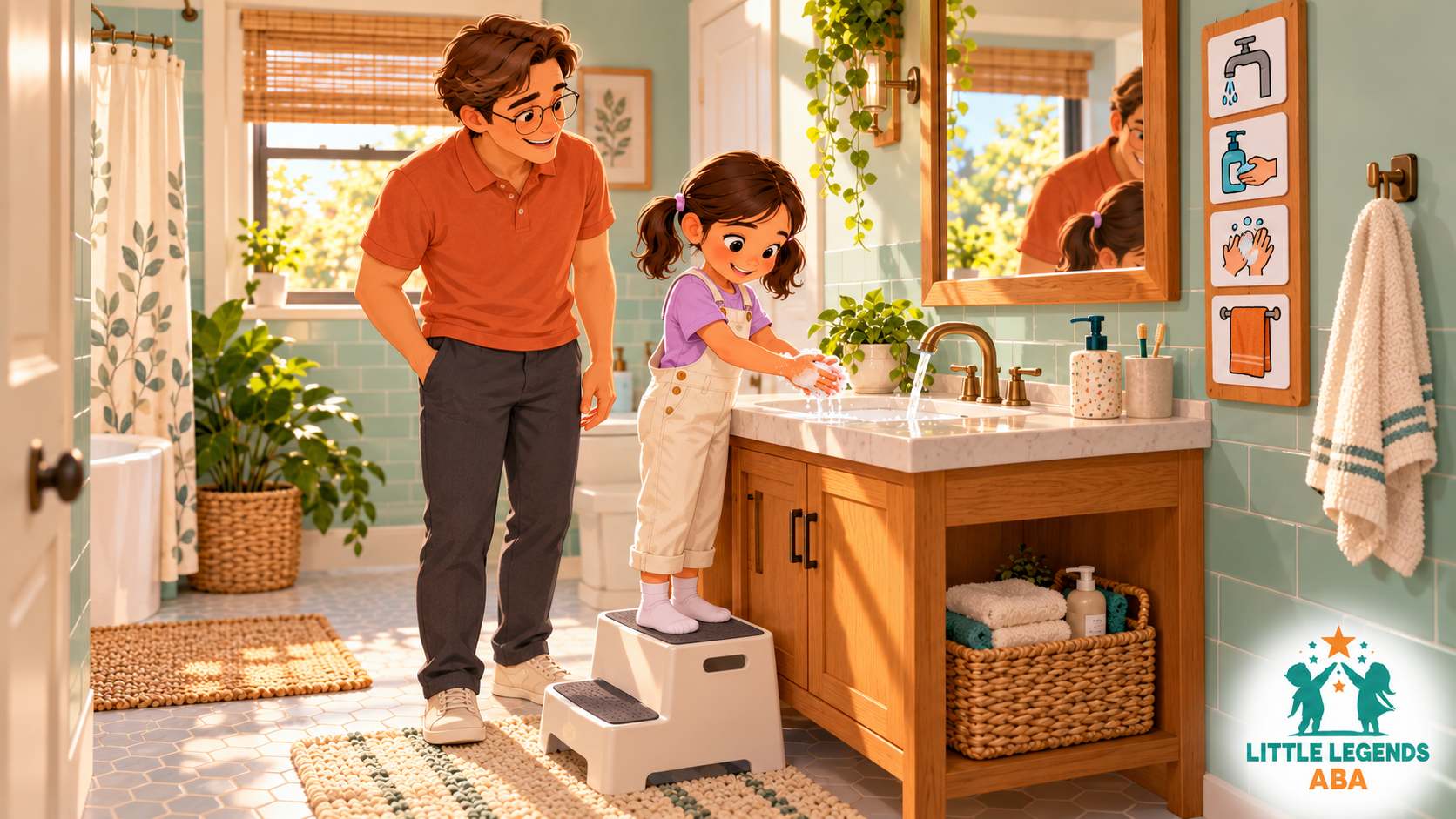
Before moving furniture or buying supplies, ask your BCBA what your child is working on right now. A child practicing requesting snacks may need a very different setup than a child learning dressing, chores, or community safety.
This is where parent involvement becomes helpful. If your team gives practice activities between sessions, keeping materials easy to find can make parent training homework feel less overwhelming.
Your BCBA may suggest supports for:
- Communication tools, such as picture cards or a speech device.
- Positive reinforcement items, such as favorite toys or activity choices.
- Sensory-friendly adjustments, such as softer lighting or noise reduction.
- Skill generalization, which means helping your child use a skill in more than one place, with more than one person.
Create Simple Therapy Zones
A therapy zone is just a clear place for a certain kind of practice. It does not have to be a separate room. When looking at how children develop and learn, it truly shows that the environment matters significantly, especially when skills are practiced during daily life routines.
For Small Homes or Shared Spaces
If you live in an apartment, studio, or multi-generational home, try portable zones instead of permanent ones. A “therapy bin” can hold a small visual schedule, reinforcers, flashcards, fidgets, and a few teaching materials. When therapy is over, the bin goes back on a shelf.
You might use:
- A corner of the kitchen table for Discrete Trial Training (DTT), which is more structured teaching.
- The couch or floor for Natural Environment Teaching (NET), which uses play and everyday routines.
- A bathroom basket for toothbrushing or handwashing goals.
- A bedroom hook or drawer for dressing practice.
Families often learn a lot by watching sessions, but active coaching can make home routines easier to carry over. If you are unsure what your role should be, this guide on parent training may help clarify the difference.
Use Budget-Friendly Organization
You do not need expensive therapy furniture. Many families can start with simple, durable items they already have.
Helpful low-cost options include:
- Clear shoebox bins for toys, cards, and sensory items.
- Painter’s tape to mark a sitting spot or play boundary.
- Zip pouches for visual cards.
- A small laundry basket for “therapy only” materials.
- Labels with pictures for children who are not reading yet.
Try to keep highly preferred items visible but not always freely available if they are being used for positive reinforcement. Your BCBA can help you do this in a supportive way, without making the home feel too restricted. Because consistency helps bridge the gap between clinical settings and the home, families benefit greatly from naturalistic intervention strategies that fit seamlessly into their everyday schedules.
Balance Structure With Real Family Life
A good ABA-friendly home still works for siblings, grandparents, meals, visitors, and rest. If a setup is too complicated, most families will not be able to maintain it, and that is completely understandable, and it might lead to many tantrums or breakdowns that can be difficult to handle.
Instead of aiming for a perfect therapy space, aim for a repeatable rhythm. For example, the kitchen table might be used for structured learning for 15 minutes, then return to snack time. The living room might support play goals during the day and family movie time at night.
If therapy has not started yet, small steps like creating predictable routines and reducing clutter in one area can help your child feel more prepared. You can also review ways to support your child before services begin.
Update the Space as Your Child Grows
Your child’s environment should change as goals change. Early intervention may focus on communication, play, imitation, or following simple routines. Later, the same home setup may support cooking, hygiene, homework, laundry, or safety skills.
Check in with your BCBA regularly about what to keep, remove, or rotate. Also inspect sensory equipment, bins, chew-safe items, and seating for wear and safety. Long-term organization works best when materials are easy to clean, easy to store, and still useful for your child’s current goals.
The goal is not to create a clinic at home. The goal is to build a home where your child can practice meaningful skills with the people who care about them most.
References
- National Library of Medicine: Understanding the Effects of Naturalistic Developmental Behavioral Interventions
- National Library of Medicine: Effects of Parent-Implemented Interventions on Outcomes of Children with Autism
- PubMed: Parent-Mediated Interventions for Children and Adolescents With Autism Spectrum Disorders
- ScienceDirect: The effects of naturalistic developmental behavioral interventions in young children with autism spectrum disorder